Engraving Notes
CO2 or Fiber: Which Laser Your Job Actually Needs
The two laser types mark completely different materials. Sending a job to the wrong one wastes money and time.
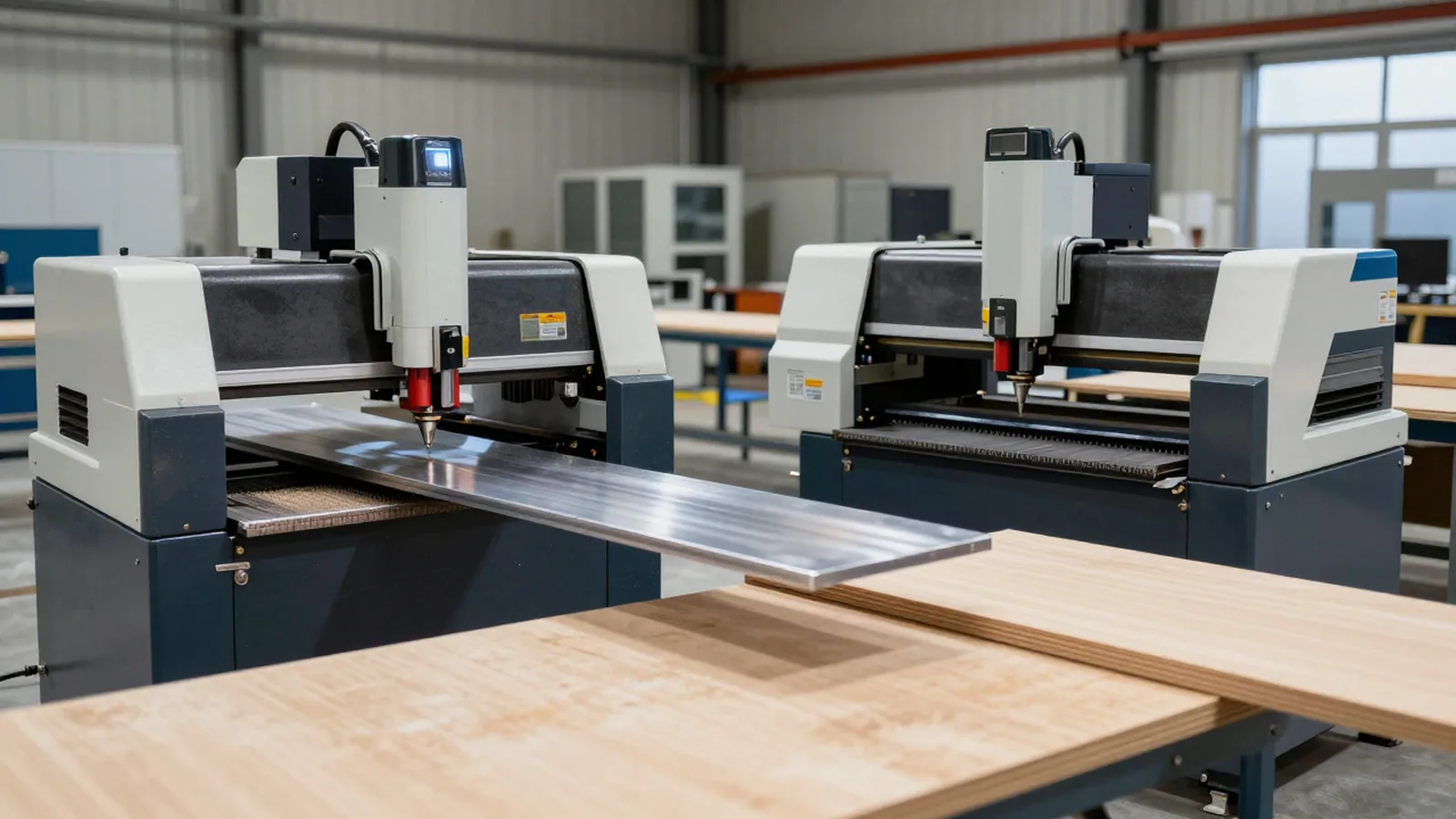
Two different tools that look identical from outside
A CO2 laser and a fiber laser sit in similar-looking boxes and both say 'laser engraver' on the invoice, but they emit different wavelengths and mark almost non-overlapping sets of materials.
CO2 lasers (10,600 nm) are absorbed by organic materials — wood, acrylic, leather, glass, paper, rubber, stone. Fiber lasers (1,064 nm) are absorbed by metals and engineering plastics — stainless, aluminum, brass, titanium, ABS.
What each one is for
Send to a CO2 laser: hardwood plaques, acrylic signage, leather goods, glassware and decanters, slate coasters, cutting boards, rubber stamps, paper and cardstock.
Send to a fiber laser: stainless instruments, anodized aluminum tags, brass plates, titanium hardware, serialized asset tags, tool marking and any bare metal that needs a permanent annealed mark rather than a surface coating.
The overlap, and where people get it wrong
Coated metals confuse everyone. A CO2 laser can mark powder-coated or anodized aluminum, because it is removing the coating rather than marking the metal — which looks great until the coating wears and the mark disappears with it.
A fiber laser marks the substrate itself. For a promotional tumbler, coating removal is fine. For an asset tag that has to be readable in fifteen years, it is not. Ask which method a shop is using before you approve a proof.
What this means for your quote
We run both, which means we route the job to the correct machine instead of forcing it onto whichever one we own. If a shop only has one laser type, every job gets quoted on that machine whether or not it belongs there.
If you are comparing quotes and one is dramatically cheaper, ask what machine and what marking method. Frequently the cheap quote is coating removal on a job that needs substrate marking, and you will pay for it again in two years.